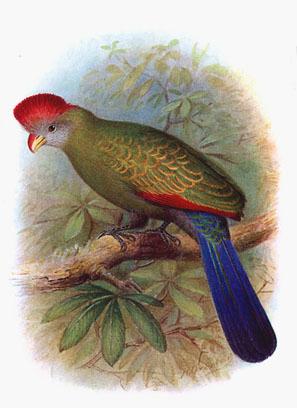
The Banggai fruit dove, also known as the maroon-chinned fruit dove, is a species of bird in the family Columbidae. It is endemic to the Banggai Islands. Its natural habitat is subtropical or tropical moist lowland forests. This species was formerly placed in the genus Ptilinopus. It is threatened by habitat loss.
Region
Wallacea (Sulawesi satellite islands)
Typical Environment
Occurs only in the Banggai archipelago, primarily on Peleng and adjacent small islands. It inhabits subtropical and tropical moist lowland forests, including primary forest and older secondary growth. Birds are most often encountered around fruiting trees along forest edges and in lightly logged tracts, but they avoid heavily degraded areas. The species uses the mid- to upper canopy, where it forages discreetly and rests in dense foliage.
Altitude Range
Sea level to 800 m
Climate Zone
Tropical
Ease of Keeping
Beginner friendly: 2/5
This elusive fruit-dove is confined to Indonesia’s Banggai Islands, where it keeps to the mid- to upper canopy. It plays an important role in seed dispersal for many native trees, especially figs. Because it relies on intact lowland forest, it is sensitive to logging and agricultural expansion. Careful management of remaining forests is critical for its survival.
Temperament
shy and canopy-dwelling
Flight Pattern
short rapid wingbeats with swift, direct dashes between trees
Social Behavior
Usually seen singly or in pairs, occasionally small loose groups at fruiting trees. Nests are typical dove platforms of small twigs placed on horizontal branches in dense foliage. The clutch is usually a single egg, with both parents sharing incubation and chick-rearing duties.
Migratory Pattern
Resident
Song Description
Vocalizations are soft, low coos delivered from concealed perches high in the canopy. Notes are subdued and repeated in slow sequences, often heard at dawn and late afternoon.
Plumage
Compact, soft-feathered fruit-dove with predominantly green plumage and a neat, sleek appearance. The throat shows a distinct maroon or wine-colored patch bordered by paler tones, with a slightly grayer head and nape. Underparts are green with subtle yellowish hues toward the belly and vent; undertail coverts can be yellowish. Females are similar but often duller with a less contrasting chin patch.
Diet
Primarily feeds on small fruits and berries, especially figs (Ficus) and other canopy drupes. It swallows fruits whole and later disperses seeds, aiding forest regeneration. Occasional intake of softer seeds or flower parts may occur when fruit is scarce.
Preferred Environment
Forages in the mid- to upper canopy of intact or lightly disturbed lowland forest. Frequently visits fruiting trees along forest edges, ridgelines, and in older secondary growth. It rarely descends to the ground.