

The Australian ringneck is a parrot native to Australia. Except for extreme tropical and highland areas, the species has adapted to all conditions. Treatments of genus Barnardius have previously recognised two species, the Port Lincoln parrot and the mallee ringneck, but due to these readily interbreeding at the contact zone they are usually regarded as a single species B. zonarius with subspecific descriptions. Currently, four subspecies are recognised, each with a distinct range.
Region
Australia
Typical Environment
Occurs widely through southwestern, southern, and inland Australia, with gaps in the far tropical north and alpine zones. Habitats include open eucalypt woodlands, mallee scrub, riparian stands, and semi-arid shrublands. They also use farmland edges, orchards, and urban parks where mature trees are available for roosting and nesting. Avoids dense rainforest and treeless desert interiors. Highly adaptable to mosaic landscapes with scattered trees and water sources.
Altitude Range
Sea level to 1200 m
Climate Zone
Temperate
Ease of Keeping
Beginner friendly: 3/5
The Australian ringneck is a hardy parrot found across much of Australia, avoiding only the wet tropics and highest ranges. Four subspecies are recognized, including the well-known ‘twenty‑eight parrot’, and they intergrade where ranges meet. Their name refers to the distinctive yellow collar on the hindneck. They readily adapt to modified landscapes, often visiting orchards and town parks.


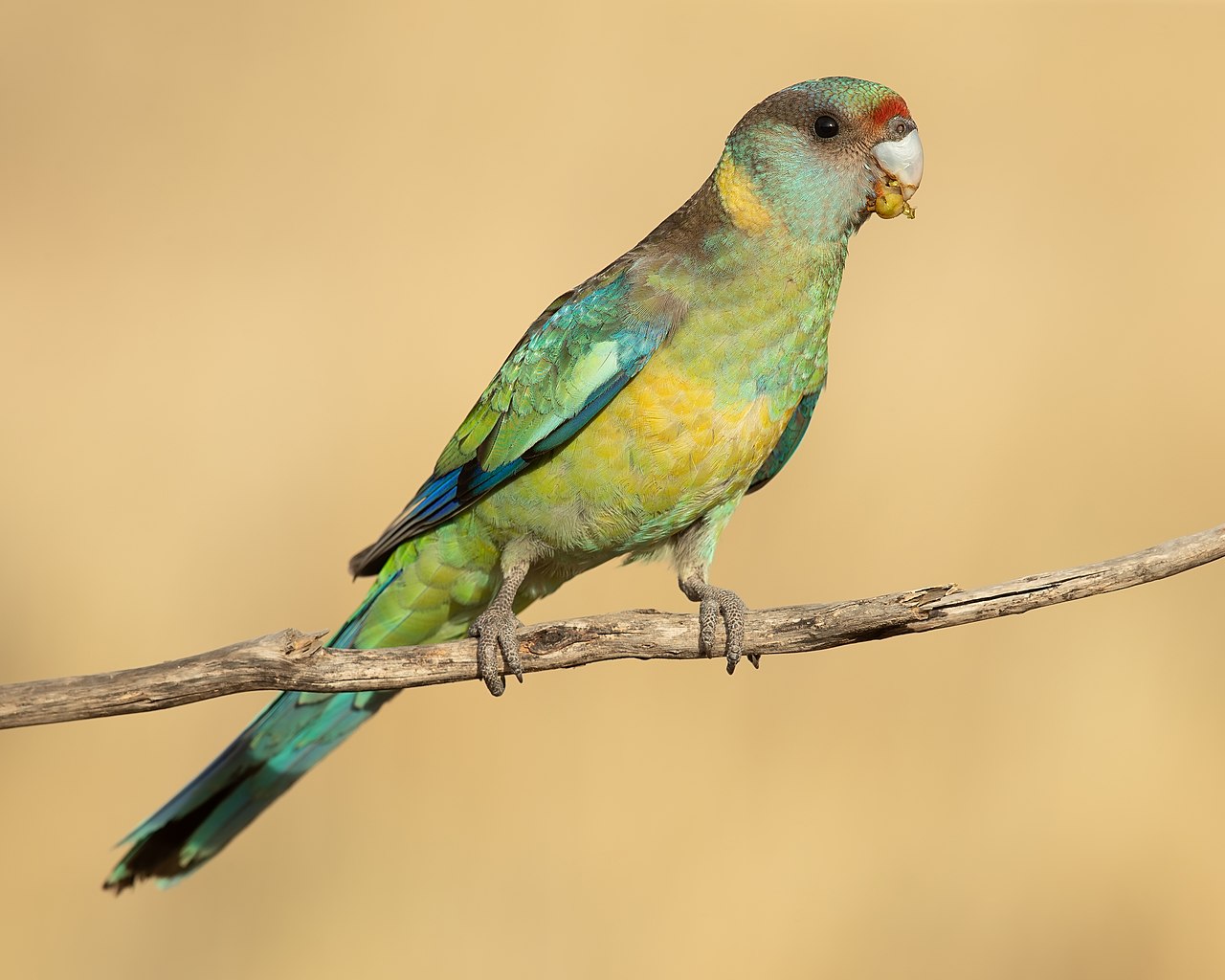
B. z. semitorquatus, Perth, Western Australia


Temperament
social and active
Flight Pattern
short rapid wingbeats with swift, direct flight
Social Behavior
Usually seen in pairs or small family groups, forming larger flocks outside the breeding season. Pairs bond strongly and nest in tree hollows, especially in mature eucalypts. Clutch size is moderate, and both parents attend the young.
Migratory Pattern
Resident
Song Description
Calls are ringing and repetitive, often a two‑syllable ‘twenty‑eight’ note in one subspecies, with harsh chattering in flocks. Contact calls carry far in open woodland, while softer warbles occur at close range.
Plumage
Mostly green with a distinct yellow hindneck collar, blue tones on the wings and rump, and a long blue‑green tail. Some subspecies show a dark (almost blackish) head and a small red frontal band, while others have more olive or brownish heads. Underwings show yellow panels in flight.
Diet
Feeds on seeds of grasses and herbs, eucalypt and acacia seeds, flowers and nectar, and seasonal fruits and berries. Will take buds and blossoms and occasionally consumes insect larvae. In agricultural areas, it may forage on spilled grain and visit orchards.
Preferred Environment
Forages both on the ground and in tree canopies, especially in open woodlands, mallee, and along watercourses. Frequently visits farm edges, roadside trees, and town parks with mature eucalypts.


