

The Australasian shoveler is a species of dabbling duck in the genus Spatula. It ranges from 46 to 53 cm. It lives in heavily vegetated swamps. In Australia it is protected under the National Parks and Wildlife Act 1974. They occur in southwestern and southeastern Australia, Tasmania, and New Zealand. The male has a blue-grey head with a vertical white crescent in front of the eyes.
Region
Australasia (Australia and New Zealand)
Typical Environment
Occurs across southwestern and southeastern Australia, Tasmania, and throughout much of New Zealand. Prefers shallow, heavily vegetated freshwater and brackish wetlands, including swamps, lagoons, and slow-flowing river margins. Also uses farm dams, sewage ponds, and estuarine margins when available. Distribution is patchy and can shift with seasonal rainfall and wetland condition.
Altitude Range
Sea level to 1500 m
Climate Zone
Temperate
Ease of Keeping
Beginner friendly: 2/5
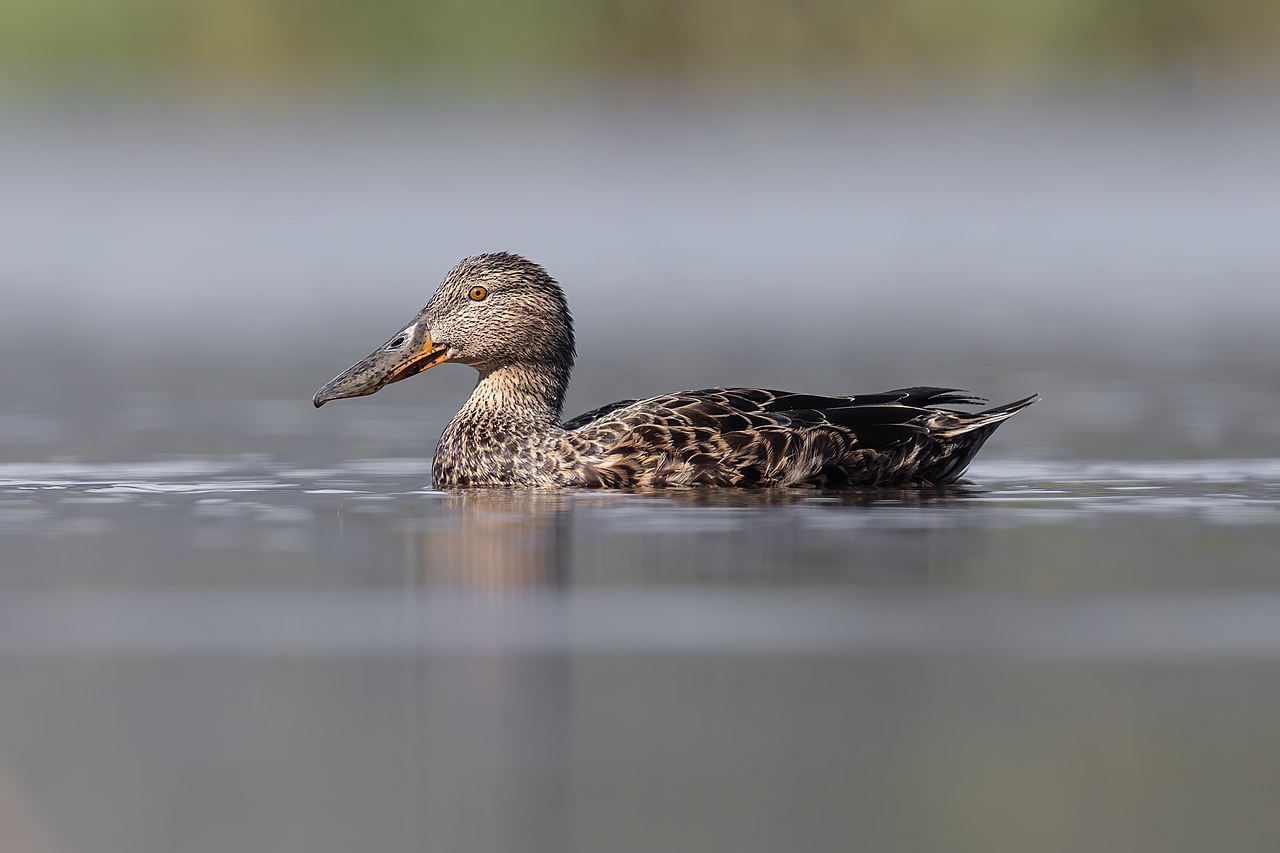
This dabbling duck has a distinctive broad, spoon-shaped bill lined with fine lamellae that sieve small prey and seeds from the water. Males show striking breeding plumage with a blue-grey head and a white facial crescent, then molt into a duller eclipse plumage that resembles the female. They are wary and often use dense wetland vegetation for cover. Movements can be nomadic, tracking rainfall and wetland availability.


Temperament
wary and secretive
Flight Pattern
short rapid wingbeats with swift, direct flight
Social Behavior
Forms small to large flocks outside the breeding season, often mixing with other dabbling ducks. Pairs form in late winter to spring; nesting is on the ground in dense vegetation close to water. Clutches typically have 8–12 eggs, and the female incubates while the male often remains nearby. Broods feed in sheltered, vegetated shallows.
Migratory Pattern
Partial migrant
Song Description
The male gives a soft, wheezy whistle or whook note, especially during display. Females produce a harsher, quacking call used in contact and alarm. Wingbeats in flight can produce a noticeable whistling sound over flocks.
Plumage
Male in breeding plumage has a blue-grey head with a sharp white vertical crescent before the eye, chestnut flanks finely speckled, dark back, and pale blue forewing with a green speculum. Female is mottled brown with darker streaking and a similarly broad bill. Both sexes show a large, spatulate bill and compact, low-slung profile on the water.
Diet
Feeds by filtering small aquatic invertebrates such as crustaceans, insect larvae, and zooplankton, along with seeds and tender plant material. The specialized bill sweeps side-to-side through surface water and mud to strain food. Will graze or tip-up in shallow water and occasionally forage along muddy margins. Diet composition shifts seasonally with wetland productivity and breeding demands.
Preferred Environment
Shallow, calm wetlands with abundant emergent vegetation where it can dabble and filter-feed. Frequently forages along the edges of swamps, lagoons, and flooded pastures, and uses sheltered corners of estuaries.


