
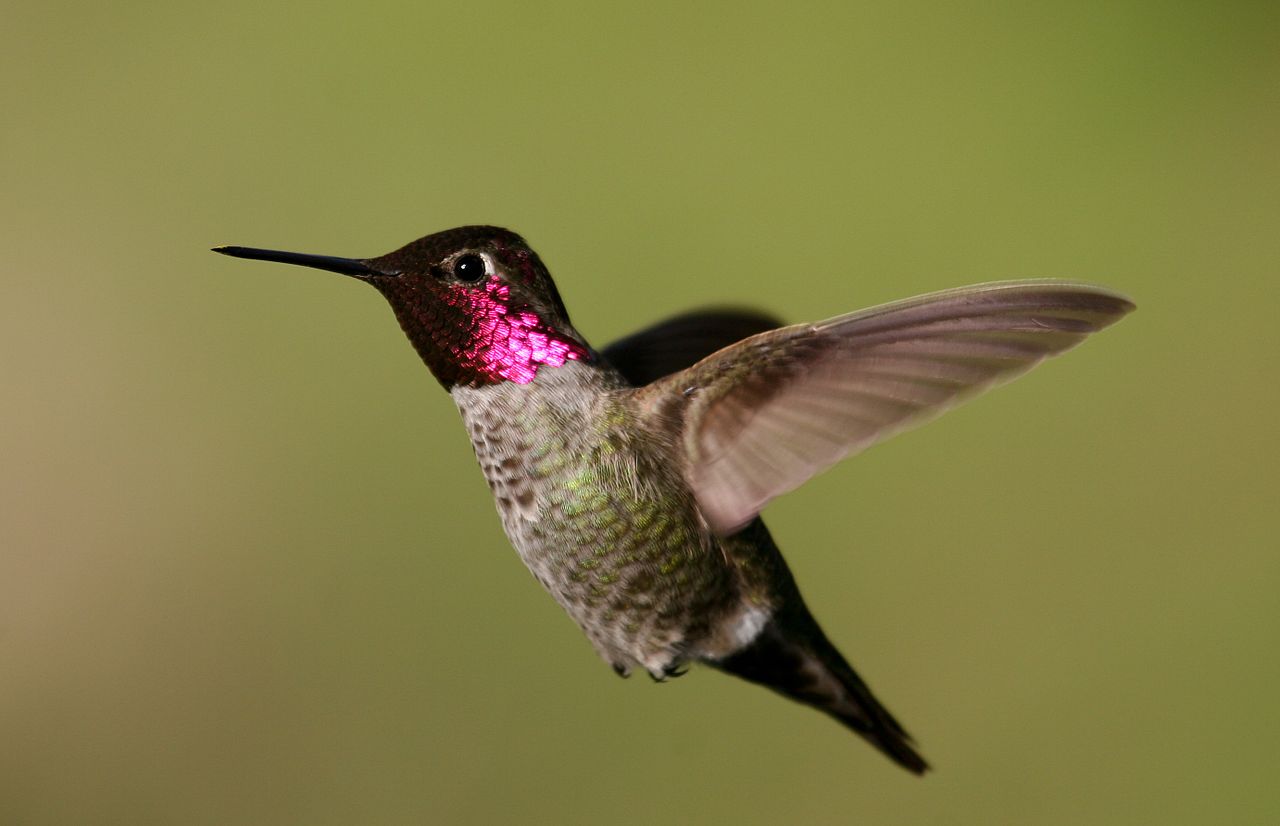
Anna's hummingbird is a North American species of hummingbird named after Anna Masséna, Duchess of Rivoli.
Region
Pacific Coast of North America
Typical Environment
Primarily along the Pacific Coast from Baja California through California and north into Oregon, Washington, and southern British Columbia, with inland pockets where suitable habitat and feeders occur. Found in coastal scrub, chaparral, oak woodland edges, riparian corridors, parks, and residential gardens. They readily use urban landscapes with flowering ornamentals and feeders. Range has expanded in recent decades due to landscaping and supplemental feeding.
Altitude Range
Sea level to 2500 m
Climate Zone
Temperate
Ease of Keeping
Beginner friendly: 1/5
Anna's hummingbird is a North American species of hummingbird named after Anna Masséna, Duchess of Rivoli. Males have an iridescent rose-magenta crown and gorget that can look dull until it catches the light. They have adapted well to urban and suburban habitats and have expanded their range northward, aided by ornamental plants and backyard feeders.


A male bird displaying its iridescent head feathers

Female in nocturnal torpor during winter; −8 °C (18 °F), near Vancouver, British Columbia. The bird remained in torpor with an unchanged position for more than 12 hours.

Male displaying iridescent head feathers


Male, in Vancouver


Temperament
territorial and bold
Flight Pattern
hovering with rapid wingbeats; agile bursts and steep display dives
Social Behavior
Generally solitary outside of breeding, with males defending rich nectar sources vigorously. Courtship includes dramatic, high-altitude dive displays that produce a sharp chirp from the tail feathers. Nests are tiny cups of plant down and spider silk placed on horizontal branches, often in gardens and parks.
Migratory Pattern
Resident
Song Description
Males give a scratchy, buzzy song interspersed with thin, high-pitched notes from exposed perches. Calls include sharp chips; display dives end with a loud tail-generated chirp.
Plumage
Male with highly iridescent rose-magenta crown and gorget, metallic green upperparts, and grayish underparts; female/immature with green upperparts, gray below, and variable small reddish throat spots.
Diet
Feeds mainly on nectar from a wide variety of native and ornamental flowers, including sages, manzanitas, and eucalyptus. Also takes small insects and spiders for protein, hawking them in flight or gleaning from foliage. Will visit sap wells made by sapsuckers and frequently uses backyard sugar-water feeders.
Preferred Environment
Forages in flowering shrubs, tree canopies, and garden plantings, often along edges where blooms are dense. Common in urban and suburban settings with year-round flowers or feeders.


