

The Andean goose is a species of waterfowl in tribe Tadornini of subfamily Anserinae. It is found in Argentina, Bolivia, Chile, and Peru.
Region
Central Andes
Typical Environment
Occurs across high-altitude wetlands and grasslands of Peru, Bolivia, northern Chile, and northwestern Argentina. It favors open puna and bofedales (cushion bogs) adjacent to shallow lakes and lagoons. Nests are placed on the ground, often on islets or shorelines with good visibility. Outside the breeding season it may use nearby agricultural pastures but remains tied to wetlands. It avoids dense vegetation and steep, rocky slopes away from water.
Altitude Range
3000–5000 m
Climate Zone
Highland
Ease of Keeping
Beginner friendly: 1/5
A high-Andean specialist, the Andean goose spends most of its time grazing on puna grasslands around cold alpine lakes. It is strikingly black-and-white, with pink legs and a pink bill tipped in black. Pairs defend nesting territories near water, but outside breeding they gather in small flocks. Despite being capable fliers, they often prefer to walk and graze like terrestrial geese.


Andean geese feeding
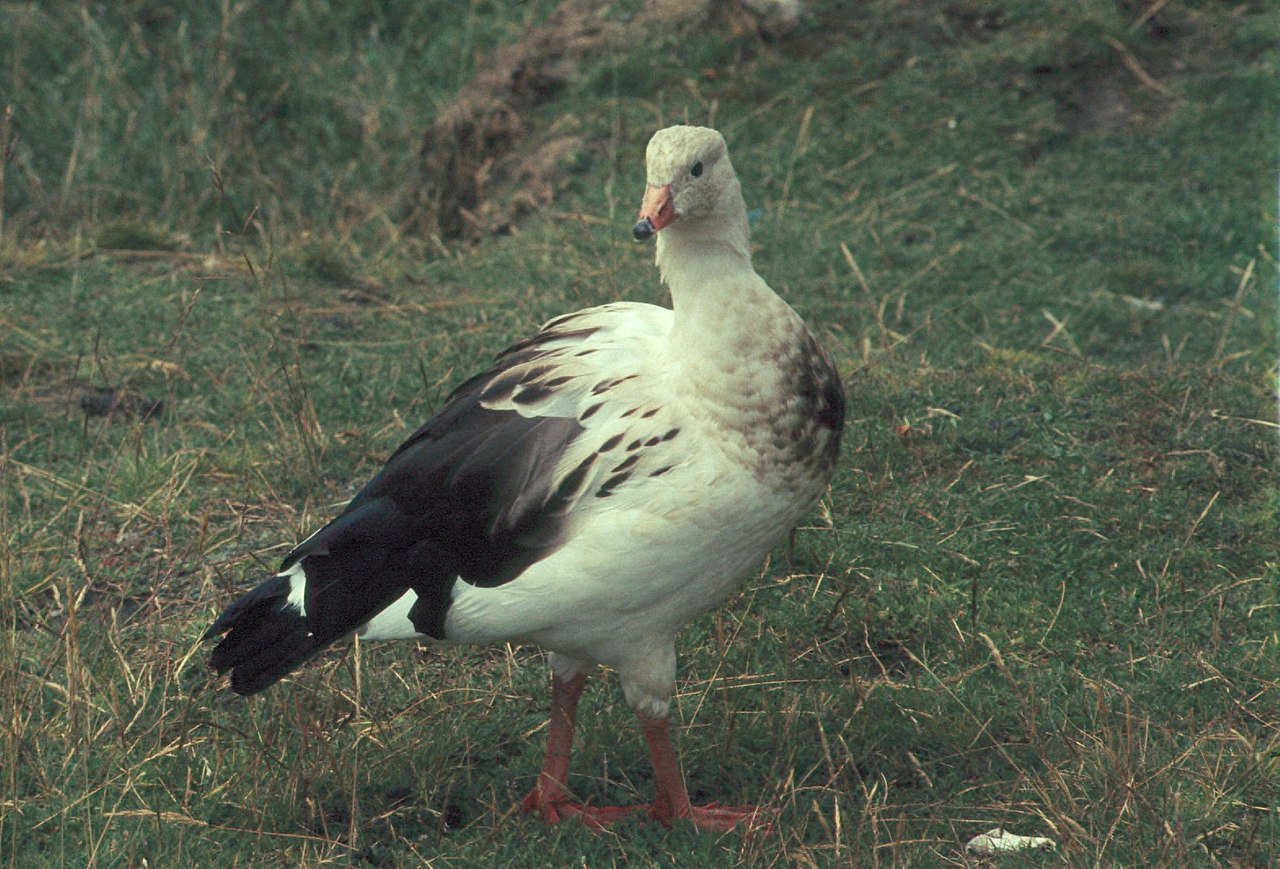
Andean goose walking in grass

Temperament
territorial in breeding season, otherwise moderately social
Flight Pattern
direct, powerful wingbeats; usually reluctant to fly and often walks
Social Behavior
Typically found in pairs or family groups and forms loose colonies around suitable lakes. Nests are ground scrapes lined with vegetation, often on islets; both parents guard the brood. Pairs maintain strong territorial defense during nesting, especially against other geese and predators.
Migratory Pattern
Partial migrant
Song Description
Vocalizations include loud, nasal honks and cackling notes used for contact and alarm. During territorial disputes, calls become more rapid and harsh, often accompanied by head-bobbing displays.
Plumage
Mostly white body with bold black flight feathers creating a broad black wing panel and a dark tail; some birds show faint gray scalloping on the back.
Diet
Primarily grazes on short alpine grasses, sedges, and aquatic plants. It clips vegetation close to the ground and may also take seeds and tender shoots. Chicks occasionally consume small invertebrates while developing.
Preferred Environment
Feeds along lake margins, wet meadows, and bofedales where lush grass growth occurs. It often forages on nearby open pastures and gently sloping shorelines with unobstructed visibility.


