

The African crake is a small- to medium-size ground-living bird in the rail family, found in most of central to southern Africa. It is seasonally common in most of its range other than the rainforests and areas that have low annual rainfall. This crake is a partial migrant, moving away from the equator as soon as the rains provide sufficient grass cover to allow it to breed elsewhere. There have been a few records of vagrant birds reaching Atlantic islands. This species nests in a wide variety of grassland types, and agricultural land with tall crops may also be used.
Region
Sub-Saharan Africa
Typical Environment
Occurs widely from central to southern Africa, avoiding dense rainforest and true deserts. Prefers moist to seasonally wet grasslands, floodplains, and damp savannas with rank cover. Frequently occupies pasture edges, fallows, and agricultural fields with tall crops. During the wet season it expands into newly green areas, retreating as cover dries out.
Altitude Range
Sea level to 2500 m
Climate Zone
Tropical
Ease of Keeping
Beginner friendly: 1/5
Often heard more than seen, the African crake calls from dense grass and flushes only at close range. It tracks seasonal rains, moving to freshly greened grasslands to breed where cover is abundant. Birds occasionally turn up far from the mainland, with rare vagrants recorded on Atlantic islands. It readily uses tall crops such as maize or sugarcane when natural cover is scarce.


In South Africa

African grassland, ideal African crake habitat
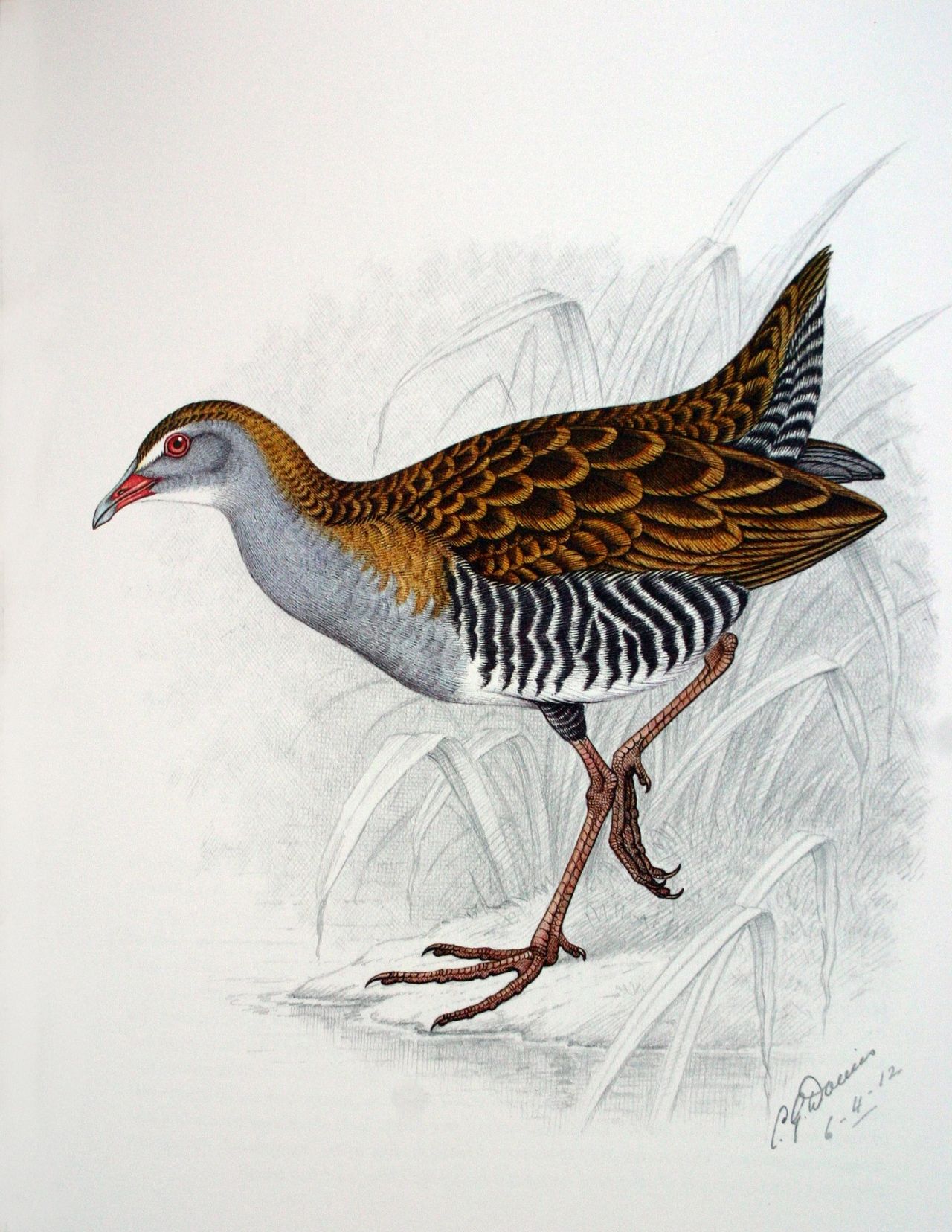
Illustration by Claude Gibney Finch-Davies, 1912

A mating pair in Chobe National Park
Temperament
secretive and crepuscular
Flight Pattern
short rapid wingbeats, low and fluttering over vegetation
Social Behavior
Typically solitary or in pairs, becoming more conspicuous during the breeding season following rains. Nests are shallow cups hidden in dense grass, usually near damp ground. Both adults remain close to cover and are quick to run rather than fly.
Migratory Pattern
Partial migrant
Song Description
A harsh, repetitive rasping call delivered mostly at night or at dusk, often carrying far across grasslands. Also gives sharp ticking notes when alarmed from cover.
Plumage
Upperparts are mottled and finely barred brown with darker streaking; face and throat grayish; wings rich rufous; flanks and underparts barred buff and dark brown.
Diet
Feeds mainly on insects such as grasshoppers, beetles, termites, and caterpillars, along with other small invertebrates like spiders and worms. Will occasionally take seeds and small plant matter, especially outside the breeding season. Forages mostly by walking and picking from the ground or low vegetation under dense cover.
Preferred Environment
Dense, rank grass and sedges near wetlands, damp savannas, and the margins of fields. Also forages in tall croplands and along fallows where cover remains tall and unbroken.


