

The akekeʻe or Kauaʻi ʻākepa is a bird species in the family Fringillidae, where it is placed in the Hawaiian honeycreeper genus Loxops. It is endemic to the island of Kauaʻi where it is found in small numbers in higher elevations. Because of their similar size, shape, and unusual bill, the akekeʻe and the ʻākepa were for some time classified as a single species. This was eventually changed, because of differences in their color, nesting behavior, and calls. The akekeʻe is extremely threatened and is predicted to face imminent extinction if mosquito control efforts on Kauaʻi are not implemented.
Region
Hawaiian Islands
Typical Environment
The ʻAkekeʻe is confined to high-elevation native wet forests on the island of Kauaʻi, especially across the Alakaʻi Plateau and adjacent ridges. It favors mature stands of ʻōhiʻa lehua and other native trees with dense canopies. The species has largely disappeared from lower elevations due to mosquito-borne disease pressure. Its remaining range is fragmented and contracting, with birds moving primarily through intact canopy. It occasionally visits forest edges but is uncommon in degraded or non-native forests.
Altitude Range
1000–1600 m
Climate Zone
Highland
Ease of Keeping
Beginner friendly: 1/5
The ʻAkekeʻe is a Hawaiian honeycreeper found only on Kauaʻi, notable for its small, slightly cross-tipped, bluish bill used to pry open leaf buds to extract insects. It relies heavily on native ʻōhiʻa lehua forests at higher elevations, avoiding mosquito-ridden lowlands. Rapid declines are driven by avian malaria spread by mosquitoes and the loss of ʻōhiʻa due to disease. Intensive mosquito control and habitat protection are considered crucial to prevent imminent extinction.


Temperament
social and active
Flight Pattern
short rapid wingbeats with quick, darting canopy flights
Social Behavior
Often travels in pairs or small groups and may join mixed-species foraging flocks of native forest birds. Breeding pairs are seasonally monogamous and build small cup nests high in native trees. Nesting is closely tied to availability of suitable foliage in mature ʻōhiʻa stands.
Migratory Pattern
Resident
Song Description
Calls are high, thin chips and soft trills that can be hard to detect in windy montane forests. The song is a series of delicate, tinkling notes and twittering phrases, less musical than some other honeycreepers.
Plumage
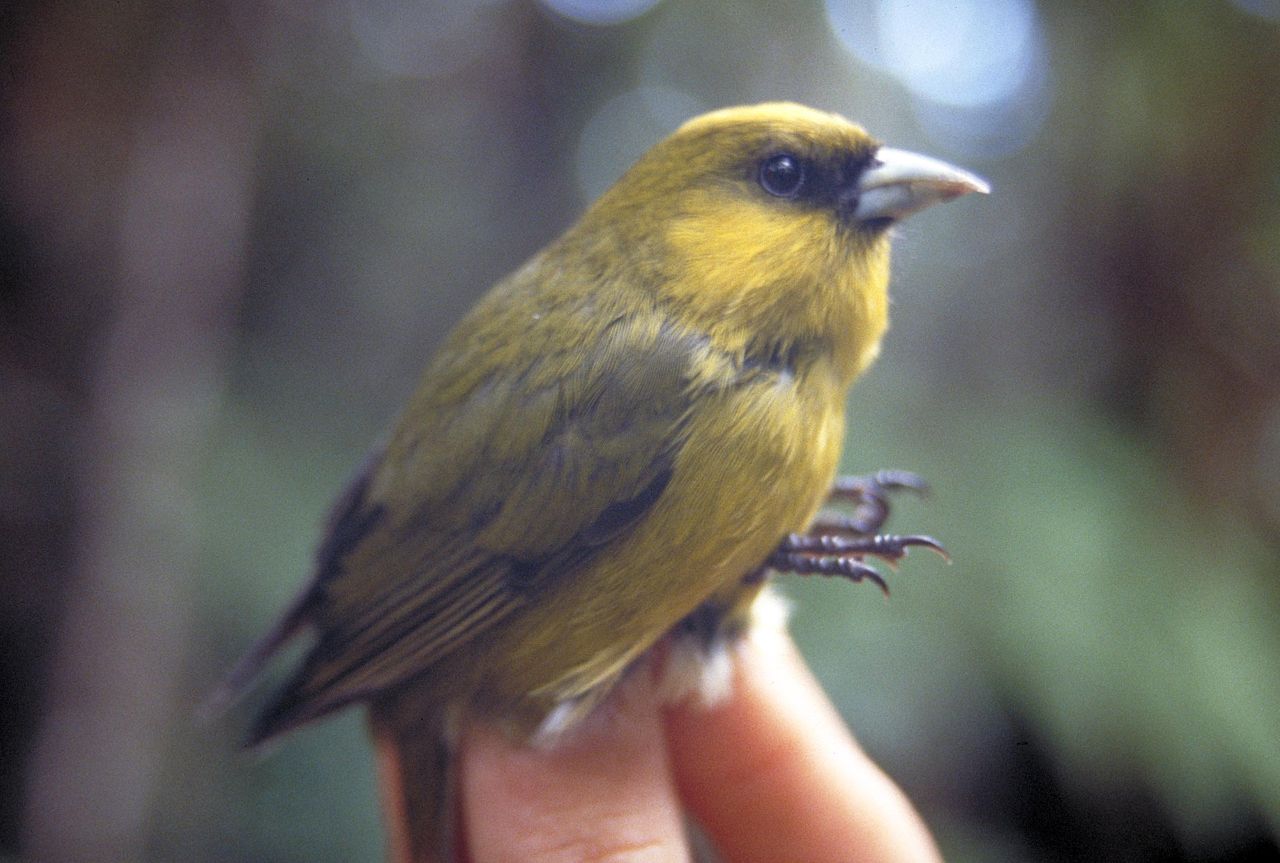
Mostly green-olive with a yellowish wash, especially on the face and underparts; females are duller and more olive. Feathers are smooth and sleek, suited to canopy foraging. The bill is short and slightly crossed at the tips, appearing bluish. Overall a compact, agile canopy bird with a neat outline.
Diet
Primarily consumes arthropods such as caterpillars, beetles, and spiders extracted from leaf buds and petioles. The slightly crossed bill is used to pry apart buds and expose concealed prey. It also occasionally takes small amounts of nectar from ʻōhiʻa flowers and may ingest minute plant material incidentally while foraging. Feeding is methodical, moving along outer foliage and probing tightly closed buds.
Preferred Environment
Feeds high in the canopy of native wet forests, especially in stands dominated by ʻōhiʻa lehua. It prefers intact, mature forest where leaf bud density and native insect prey are highest. Use of non-native trees is limited.


